

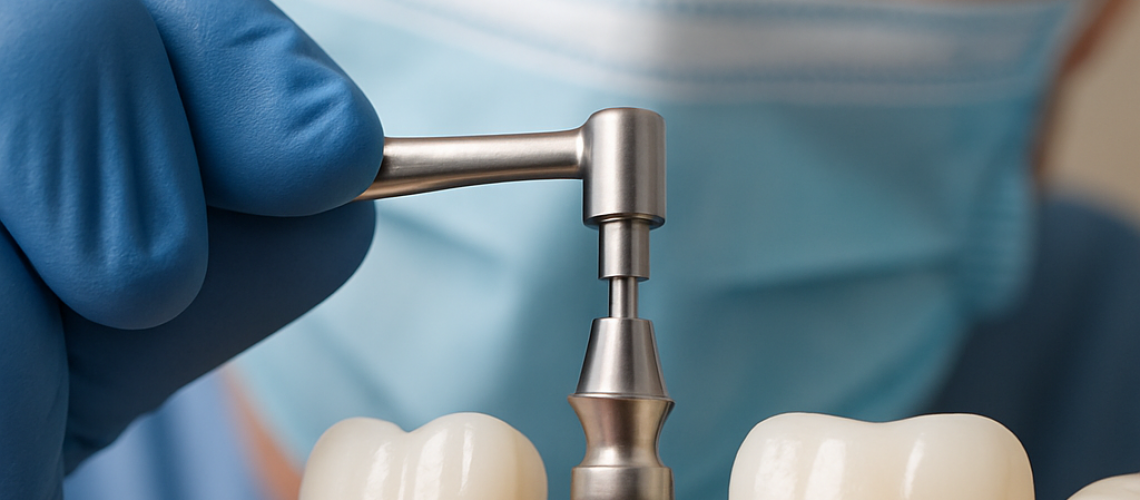
If you’re reading about an implant post, you want to know how it supports a new tooth and what to expect from the procedure. An implant post is the titanium or ceramic screw that anchors a dental implant. It replaces the tooth root, holds the abutment, and supports the final crown. Many patients choose an implant post in Plymouth, MA when they need a reliable, long‑term tooth replacement near home.
This guide explains what an implant post does, the steps for placement, material options, risks, cost factors, and how to prepare. It also outlines what to ask your surgeon and why Lane Oral Surgery is a local choice for implant post placement.
What Is An Implant Post?
An implant post is the part of a dental implant that is placed into the jawbone. It is different from the abutment and crown: the post is the root replacement, the abutment connects the post to the crown, and the crown is the visible tooth. The implant post integrates with bone through osseointegration, creating a stable base for chewing and preventing bone loss over time.
Step-By-Step: Implant Post Placement In Plymouth, MA
Initial Consult And Imaging
Your first visit includes an exam, medical history review, and 3D imaging. The CT scan helps the surgeon plan the exact size and position of the implant post in Plymouth, MA. This stage sets expectations for timelines and whether additional procedures are needed.
Preparing The Site: Extraction And Bone Graft If Needed
If a damaged tooth needs removal, the surgeon may extract it and evaluate bone health. A bone graft is recommended when jawbone volume is insufficient for a stable implant post. Grafting restores bone and may add several months to the timeline but improves long‑term success.
Placing The Implant Post And Temporary Restoration
Surgery to place the implant post in Plymouth, MA is usually done with local anesthesia plus optional IV or oral sedation. The surgeon inserts the post into the jaw and may attach a temporary restoration the same day using a SmileOn! same‑day option for immediate function and appearance.
Healing And Osseointegration
After placement, the post bonds to the bone. Healing commonly takes 3–6 months depending on bone quality and whether grafting was done. Once integrated, the abutment and final crown are attached to complete the dental implant restoration.
Types And Materials Of Implant Posts
Implant posts come in different materials and designs. Common choices include:
- Titanium: The most used material. Strong, well‑studied, and excellent for osseointegration.
- Zirconia: Metal‑free option for patients with metal sensitivity or for aesthetic cases in the front teeth.
Posts also vary by diameter and length to match each patient’s bone anatomy. Thread design and surface treatment affect how quickly the post integrates and its long‑term stability. Your surgeon will select the best post type for your dental implant needs.
Risks, Side Effects, And Recovery After An Implant Post
Short‑term symptoms after implant post surgery include swelling, bruising, soreness, and minor bleeding. These usually resolve in a few days to two weeks. Rare complications can include infection, nerve irritation, or failure to integrate.
Modern techniques like Platelet‑Rich Plasma (PRP) and guided surgery can reduce risks and speed healing. Follow postoperative instructions, keep the site clean, and attend follow‑up visits to lower complication risk.
Cost, Timeline, And Factors That Affect Implant Post Pricing In Plymouth, MA
Costs vary based on several factors related to the implant post in Plymouth, MA:
- Number of posts required (single vs. multiple)
- Need for tooth extraction and bone grafting
- 3D imaging and CT scans
- Anesthesia or IV sedation choice
- Surgeon experience and facility fees
- Same‑day SmileOn! restorations for immediate temporaries
Typical timeline: consult and imaging, preparatory procedures (if needed) 1–3 months, implant post placement, healing 3–6 months, then final crown. Lane Oral Surgery offers in‑house financing to help manage costs.
How To Prepare And Questions To Ask Before Your Implant Post Procedure
Prepare by arranging transportation for sedation days, stopping certain medications if advised, and following fasting instructions. Maintain good oral hygiene and share your full medical history.
Ask your surgeon:
- How many implant posts have you placed and what are your success rates?
- Which implant post material do you recommend and why?
- Will I need a bone graft and how long will healing take?
- What anesthesia options are available and what do you recommend?
- Can you show before/after photos for similar cases?
Why Choose Lane Oral Surgery For Implant Post Placement
Lane Oral Surgery brings over 35 years of surgical experience with a four‑doctor team serving Plymouth and nearby communities. The practice focuses on dental implant care, full‑arch reconstruction, and complex surgical cases. Lane Oral Surgery offers the SmileOn! same‑day solution for immediate temporary teeth, PRP to support healing, and multiple anesthesia options to keep patients comfortable.
If you’re considering an implant post or a full dental implant restoration, schedule a consultation to review your images and personalized plan. Contact Lane Oral Surgery to discuss implant post placement, financing options, and next steps toward a stable, natural smile.