
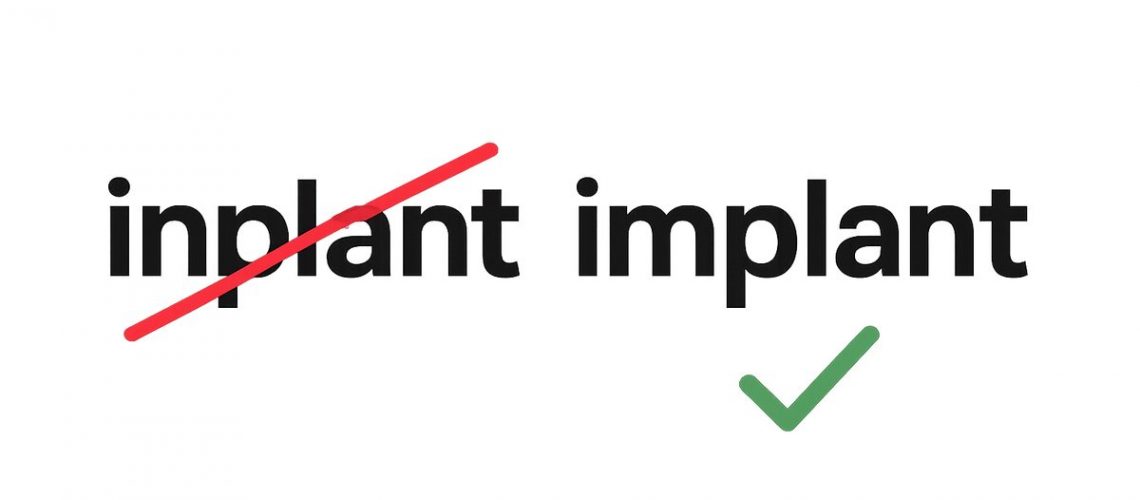
Many people type or say "implant vs inplant" when researching tooth replacement, and it causes confusion. This post clears that up: "implant" is the correct medical term for the titanium post placed in the jaw, while "inplant" is usually a misspelling or informal term. Below we’ll walk through what each term typically means by Plymouth, MA, explain the three parts of an implant restoration, who places each part, and how a coordinated team approach helps patients get a reliable, natural-looking result.
What people mean by "implant" vs "inplant"
"Implant" refers to the metal post surgically placed into the jawbone to replace a tooth root. "Inplant" is a common misspelling and not a different device. An implant restoration has three main parts: the implant (post), the abutment (connector), and the prosthetic (crown, bridge, or denture).
Implant components: post, abutment, and prosthetic
The implant (the post)
The implant is a small titanium or titanium-alloy screw placed in the jawbone. It fuses with bone over months to provide a stable foundation for chewing. Its job is to mimic a natural tooth root and preserve jawbone over time.
The abutment
The abutment is the connector that attaches to the implant and supports the visible tooth. Proper abutment selection and placement affect how the final tooth looks and functions. Sometimes the surgeon places a healing abutment at surgery; other times the restorative dentist places the final abutment.
The prosthetic restoration
The prosthetic is the visible tooth replacement — a single crown, an implant-supported bridge, or an implant-retained denture. Restorative dentists or prosthodontists design and place these pieces to match your bite, color, and smile.
What an oral surgeon does (placement of the post and abutment)
Oral surgeons handle surgical planning and the placement of the implant post and any necessary abutments. They assess bone, perform bone grafting if needed, and manage healing. Tools like in-house 3D imaging, PRP for faster healing, and sedation options (IV, nitrous, oral) improve safety and comfort. Oral surgeons usually do not place the final crown; they coordinate with your restorative dentist.
What your general dentist/restorative dentist does for the prosthetic
Your general dentist or prosthodontist takes digital scans or impressions, designs the prosthetic, and places the final crown, bridge, or denture. They handle color matching, bite adjustments, and the cosmetic finish. Good communication between surgeon and restorative dentist ensures proper timing, fit, and appearance.
Treatment timelines and common paths
Timelines vary: immediate-load options (same-day temporaries) let some patients leave with a tooth the same day. Delayed loading waits months for bone healing. Bone grafts or sinus lifts add recovery time. Solutions like SmileOn! offer same-day extraction, implant placement, and a temporary prosthetic for qualifying cases.
Risks, benefits, and cost considerations
Benefits: long-term stability, preserved bone, and natural function. Risks: surgical complications, graft failure, infection, or longer timelines if additional procedures are needed. Costs vary by number of implants, grafting, materials, and lab fees. Ask about in-house financing and payment plans.
Questions to ask your care team about implant vs inplant
- Who places the post vs the crown? - Who manages complications and follow-up? - What is the expected timeline and healing milestones? - What sedation options do you offer? - What imaging and planning tools are used? - Are there warranties or guarantees on the work? - How will you coordinate with my dentist?
About Lane Oral Surgery and how we work with your dentist
Lane Oral Surgery has 35+ years serving Plymouth-area patients. Our surgeons place implants, perform bone grafting, use advanced imaging, offer PRP and multiple sedation options, and partner closely with your dentist to deliver the final prosthetic.
Scheduling a consultation
If you’re comparing "implant vs inplant" and want a consult, request an appointment online for a second opinion or full evaluation. We offer patient resources like a smile gallery, video library, and financing to help you plan your care.