

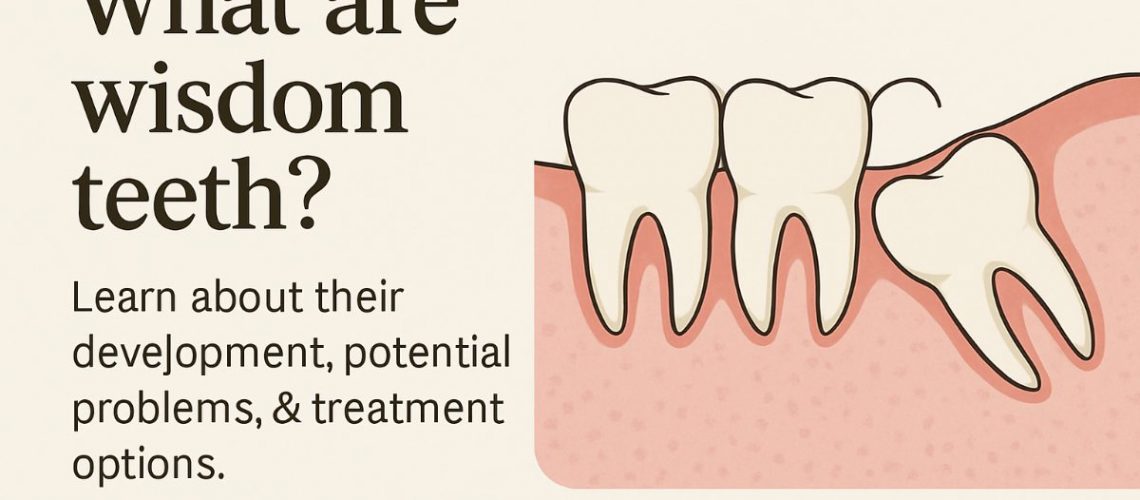
Many people ask " what are wisdom teeth?" Wisdom teeth are the third molars that usually appear in the late teens to early 20s. This article explains what they are, common problems they cause, how dentists and oral surgeons diagnose issues, treatment choices, and practical next steps if you or a teen has trouble. If you live nearby, this guide also covers care options from Lane Oral Surgery serving Plymouth, Sandwich, and Bourne.
Answering "what are wisdom teeth"
Wisdom teeth are the third set of molars at the back of the mouth. Most people get four — two on top and two on bottom — but some have fewer or none. They often erupt between ages 17 and 25. A normal wisdom tooth comes in fully and lines up with the bite. An impacted wisdom tooth is blocked by bone or other teeth and may sit sideways or only partially break through the gum.
Common problems caused by wisdom teeth
Impaction
Impaction happens when a wisdom tooth can't fully emerge. It can be partially or fully impacted. Partially impacted teeth often cause pain, swelling, and difficulty cleaning, which raises the risk of infection.
Infection and pericoronitis
When a tooth is partially erupted, food and bacteria can get trapped under the gum flap (operculum). That can lead to pericoronitis — redness, bad taste, bad breath, swelling, and sometimes fever. Recurrent infections may mean removal is best.
Crowding and damage to nearby teeth
Wisdom teeth can push on the second molars and cause pressure, pain, or shifting of teeth. They may be hard to clean, increasing the chance of decay on both the wisdom tooth and the adjacent tooth. In some cases they contribute to orthodontic relapse.
Cysts, nerve issues, and rare complications
Less often, a cyst can form around an impacted tooth and damage jawbone or roots. Lower wisdom teeth can be close to the inferior alveolar nerve; careful imaging is needed to assess nerve risk before surgery.
How wisdom tooth problems are diagnosed
Diagnosis starts with symptoms and a clinical exam. Watch for pain behind the molars, swelling, trouble opening your mouth, a bad taste, or recurring infections. Your provider will check the gums, teeth alignment, and range of motion.
Imaging confirms position and risk. Common options are:
- Panoramic x-ray — shows all teeth and jaw structure.
- CBCT (3D cone-beam CT) — gives a detailed 3D view to check proximity to nerves and roots.
If you’re searching " what are wisdom teeth in Plymouth, MA," your oral surgeon can review these images and explain risks for your specific anatomy.
Treatment options: from watchful waiting to extraction
When observation is appropriate
If a wisdom tooth is fully erupted, well aligned, and causes no symptoms or disease, many dentists recommend monitoring with regular exams and x-rays. Not all wisdom teeth need removal.
Simple vs surgical extraction
Simple extraction removes a fully erupted tooth and is done like other extractions. Surgical extraction is needed when a tooth is impacted, has curved roots, or is covered by bone or gum. Surgical removal may require cutting the gum and removing bone or sectioning the tooth.
Anesthesia and comfort options
Comfort choices include:
- Local anesthesia — numbs the area for a routine extraction.
- Nitrous oxide (laughing gas) — light relaxation during the procedure.
- Oral sedation — pill-based calmer for anxious patients.
- IV sedation — deeper sedation for more complex cases or high anxiety.
Aftercare and recovery tips
- Pain control: use prescribed or over-the-counter pain meds as directed.
- Swelling: apply ice packs for the first 24–48 hours, then warm compresses if needed.
- Diet: stick to soft foods and avoid straws for a few days.
- Activity: rest and avoid heavy lifting for 48–72 hours.
- Watch for problems: call if you have heavy bleeding, fever, worsening pain, or numbness that won’t fade.
How to reduce risks and prevent problems
Tips to lower the chance of trouble:
- Keep good oral hygiene and clean around the back teeth carefully.
- Start dental evaluations in the mid-teen years so providers can monitor wisdom teeth as they develop.
- Discuss risks with your dentist or oral surgeon before symptoms start — early planning can make treatment simpler and safer.
If you’re wondering " what are wisdom teeth in Plymouth and whether they might cause problems for you or a teen, an early checkup is a good step.
About Lane Oral Surgery and how we help
Lane Oral Surgery serves Plymouth, Sandwich, and Bourne with more than 35 years of surgical experience. Our four-doctor team manages routine and complex wisdom tooth cases using modern imaging and careful planning. We offer multiple anesthesia options (local, nitrous oxide, oral sedation, IV sedation) to keep patients comfortable. We also use Platelet-Rich Plasma (PRP) to support healing and provide advanced solutions like our SmileOn! same-day implant option when tooth replacement is needed after extraction.
Next steps and scheduling an evaluation
Contact a provider if you have persistent pain, swelling, trouble opening your mouth, or recurring infections. For a personalized plan, schedule a consultation to review your images, anesthesia choices, and treatment options. You can book online or call Lane Oral Surgery to arrange an evaluation and get answers specific to your case.