
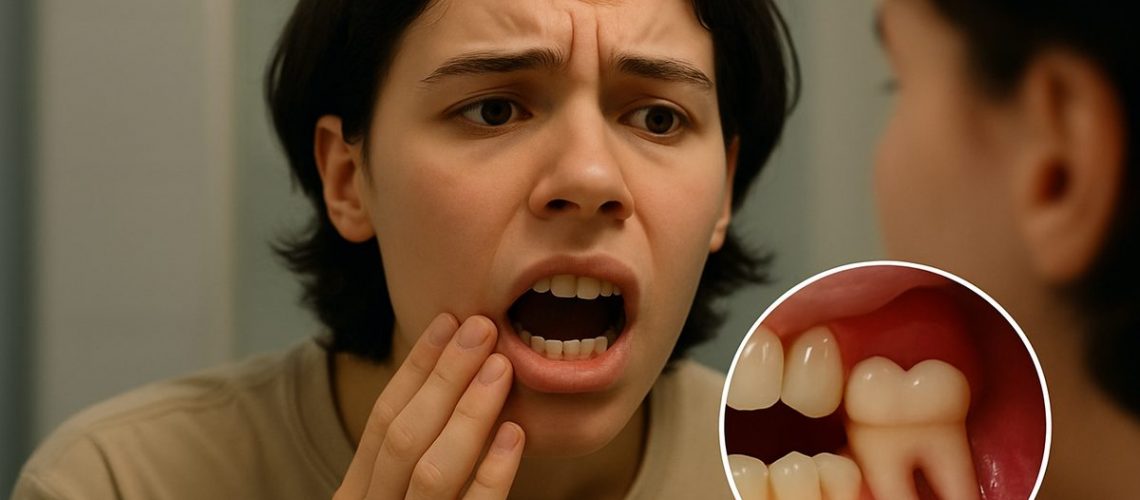
Many people ask, “do i have to take out my wisdom teeth?” This post gives plain answers: what signs mean removal is likely, how doctors decide, alternatives, what happens at a consult, and what recovery looks like. If you live near Plymouth, Sandwich, or Bourne, Massachusetts, a quick exam and imaging will usually give a clear recommendation and next steps.
How doctors determine if you need wisdom teeth removed
Symptoms that often prompt removal
Pain at the back of the mouth, repeated gum infections, swelling, bad breath, trouble opening your jaw, or recurring gum disease around the rear molars are common red flags. When these symptoms happen more than once, removal is often recommended.
Dental exam and imaging
Your surgeon will review a clinical exam plus X-rays or a CBCT scan. Imaging shows impaction, the tooth angle, root position, and how close roots are to nerves or sinuses. Those details help answer “do i have to take out my wisdom teeth” safely and predictably.
Common reasons oral surgeons recommend removal
Impaction and pressure on other teeth
Impacted wisdom teeth that press on neighboring molars can cause pain, crowding, or damage to those teeth. Removing the wisdom tooth often protects the adjacent tooth.
Infection, cysts, or decay
Partially erupted teeth can trap food and bacteria, leading to pericoronitis, decay, or cysts. Repeated infection is a common reason for extraction.
Orthodontic or restorative planning
If you’re planning braces, implants, or large restorations, wisdom teeth may interfere with treatment. Surgeons sometimes remove them to make future dental work easier and safer.
When you might NOT need to have your wisdom teeth removed
Fully erupted, healthy, and functional teeth
If a wisdom tooth is straight, fully erupted, easy to clean, and not causing symptoms, many doctors recommend monitoring rather than immediate extraction.
Watchful waiting and regular checkups
Regular dental exams and periodic imaging let your dentist or surgeon catch changes early. If an otherwise healthy wisdom tooth starts causing problems, you can move to treatment at that point.
What to expect at a consultation
Medical history, exam, and imaging
Your surgeon will review health history, medications, a mouth exam, and X-rays or CBCT. That review answers the core question: do i have to take out my wisdom teeth near Plymouth, MA?
Treatment options and anesthesia choices
Options range from simple local-extraction to IV sedation, nitrous oxide, or oral sedation for comfort. Your team will recommend the safest choice based on complexity and your comfort.
Estimate of risks, recovery time, and cost
Surgeons outline typical healing, possible complications like dry socket or nerve irritation, and expected recovery time and fees so you can decide.
Recovery, risks, and ways we help healing
Typical recovery timeline
Swelling and discomfort peak in the first 48–72 hours. Most people return to normal activity in 1–2 weeks with proper care.
Possible complications and how they’re managed
Watch for severe pain, fever, or numbness. Dry socket and infection are treatable; call your surgeon if concerns arise.
Advanced tools to support healing
Lane Oral Surgery uses advanced digital planning and offers platelet-rich plasma (PRP) to support faster healing in appropriate cases.
Questions to ask at your visit
Ask: Why do you recommend removal for me? What are the specific risks? Which anesthesia do you offer? How long will I be out of work? Do you use PRP or advanced imaging?
About Lane Oral Surgery and next steps
Lane Oral Surgery has over 35 years of experience and a four-doctor team serving Plymouth, Sandwich, and Bourne. We offer in-house imaging, sedation options, PRP, and patient resources. You can schedule a consultation online to get a personalized plan and affordability options. If you’re wondering “do i have to take out my wisdom teeth in Plymouth, MA,” a short exam and imaging will give a clear answer. Call or book a consult with Lane Oral Surgery to get your personalized recommendation.